About Rules of Activism
Every major arena of American life—voting rights, environmental policy, immigration, war and peace, the civil service, the courts—is now a site of political conflict.

Responding effectively requires strategy, not reflex. That’s why Charles Euchner wrote Rules of Activism.
Without understanding how political power works from the bottom up—how movements form, how opposition succeeds or fails, and how strategy differs from expression—reformers and resisters struggle to find their footing.
Here’s the problem: Political activism is rarely taught systematically. As Bill McKibben says, “there’s no West Point for activists.”
What’s missing is a shared framework for exercising power at the grassroots level.
Lacking that framework, people become reactive. Instead of building coalitions and compounding power, activists often stage a rally and then disappear.
But that’s not an option anymore.
Rules of Activism offers a practical framework for understanding the realities of political and social movements—how they actually operate. The book identifies fifteen concrete rules of activism. Drawn from history, rigorous research, real-world case studies, Rules of Activism shows how movements gain traction, build power, and confront the opposition.
Each rule is grounded in a detailed case study, followed by analysis that explains why the rule works and when it fails. The rules cover the territory: identifying issues and communities, building capacity, strategies and tactics, and moving from protest to policy.
(Get the Rules of Activism’s Table of Contents)
Rules of Activism is a field guide for political action. It helps us to make sense of events as they unfold—why certain moves succeed, why others fail, and how power is being accumulated or squandered.
Instead of seeing events in isolation, Rules of Activism shows how to recognize patterns, sequences, and leverage points, helping them decide when to mobilize, when to organize, when to wait, and how to move from protest toward durable policy change.
Charles Euchner brings this framework to universities, civic organizations, newsrooms, and activist groups through talks, interviews, and workshops. Sessions focus on concrete questions audiences face right now: how to diagnose a moment, identify leverage, choose targets, sequence actions, build coalitions, and convert pressure into policy.
Audiences gain a usable roadmap for movement dynamics and a short list of next moves tailored to their context—what to do first, what to avoid, and how to tell whether an effort is compounding or dissipating.
About the Author
Charles Euchner (pronounced IKE-ner) studies how democracy works in practice—how ideas move, how coalitions form, and how pressure turns into policy. He has worked on grassroots policy throughout his career, not only as a scholar and policy expert, but also inside government, examining the mechanics of power from multiple vantage points.
Educated at Vanderbilt University and the Johns Hopkins University, Euchner has taught writing, politics, and public policy at Yale University, Columbia University, and the College of the Holy Cross, with a focus on helping people understand complex systems clearly enough to act within them.
Beyond academia, Euchner has worked inside government and policy organizations, including as a planner for the City of Boston, where he worked directly with community activists to translate neighborhood demands into citywide plans, budgets, and policy decisions. He has held senior roles at organizations such as New America, the Center for an Urban Future, and Harvard University’s Rappaport Institute, where he designed research agendas, advised policymakers, and worked with advocates to turn analysis into actionable policy strategies.
He is the author of multiple books on American politics, history, and civic life. Across this work, his central concern has been consistent: how ordinary people organize, exert pressure, and make change in systems that resist it.
Euchner, a frequent speaker and commentator on American politics and civic life, is known for explaining complex dynamics in clear, direct language. His work emphasizes strategy over spectacle, diagnosis over outrage, and sustained action over symbolic gestures.
Get the Rules of Activism’s Table of Contents.
Get a breakdown of The Rules.
Early Reviews
Leading scholars and practitioners have praised Rules of Activism for its clarity and detailed treatment of this complex subject.
Nonviolent movement building is one of the greatest of twentieth-century inventions, a way for the powerless to stand up to the powerful. But we don’t study it systematically — there’s no West Point for activists. That makes a book like this, rich in detail and history, tremendously useful to everyone trying to make change happen.
—Bill McKibben, author of The End of Nature
Surprisingly, there are relatively few books about protest movements with a practical, activist’s orientation. Charles Euchner has developed fifteen helpful Rules of Activism that will inform and motivate anyone with a practical interest in protest, from beginners to seasoned organizers
—Jeff Goodwin, New York University
This enticing, informative, and beautifully composed book not only captures the essence of activism but provides a powerful guide for those who wish to become active in the political and social arena. Euchner uses his in-depth understanding of activism across the centuries—drawing on a spectacular range of examples—to bring to life the importance of activism in any democracy.
—Barry Bluestone, Northeastern University
Wow! It’s superb! Timely, readable, clear, extensive, a mix of theory and wonderfully textured examples and case studies. Reading through it, I realized that in my neck of the woods, academic political theory, there is a dearth of literature on activism as such, and certainly no comprehensive field guide. Oh, there have been some abstruse theoretical renderings, but nothing with a go-to, can-do comportment that doesn’t compromise one’s intellectual chops … I don’t think they make the transition from theory to action in the way that you have.
—John Seery, professor of political science at Pomona College and author of Political Theory for Mortals
Biography
Charles Euchner, who teaches writing at Yale University, is the author of acclaimed books on American history, politics, and society.
Previously he has been the special projects editor at New America, a research fellow at the Center for an Urban Future, and the founding director of Harvard University’s Rappaport Institute. He has written widely about American politics and history.
For his whole career as a writer and scholar, Euchner has focused on grassroots politics. His works on urban politics (Playing the Field and Urban Policy Reconsidered) explore, in part, the role of activists in local politics.
His book Extraordinary Politics assays the role of political and social movements in the U.S. His work for think tanks—like New America and the Center for an Urban Future—likewise explore the importance of activism on policymaking.
As a planner for the City of Boston, Euchner worked closely with activists on the development of a citywide planning vision.
Exam and Review Copies
For media inquiries, email Polity Press at [email protected]. Get exam copies for college classes by sending an email, with course details, to [email protected].
Author Availability
Charles Euchner has spoken to a wide range of academic and activist groups over the years, as well as media outlets. Bring him to your university or organization. Email him at [email protected] or [email protected].
Photos
- Headshot (Photo credit: Isabel Chenoweth)
- Book cover (3D cover)
Past Interviews
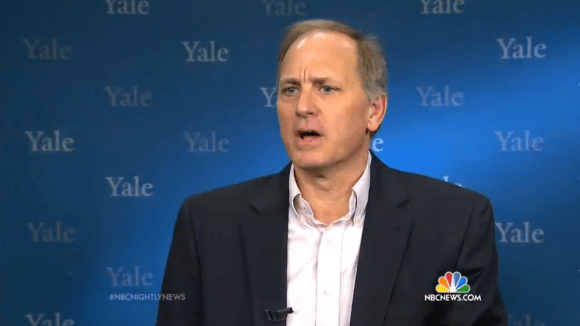
Charlie Euchner has been appeared in a wide range of news outlets, from The New York Times to “All Things Considered” to “Nightline.” To get a sense of his style as an interviewee, check out these interviews:
- Interview with NPR’s All Things Considered” about Nobody Turn Me Around.
- Interview with Sonali Kolhatkar.
- All Sides With Ann Fisher.
- C-SPAN Book Talk.
- The Pat Williams Show.